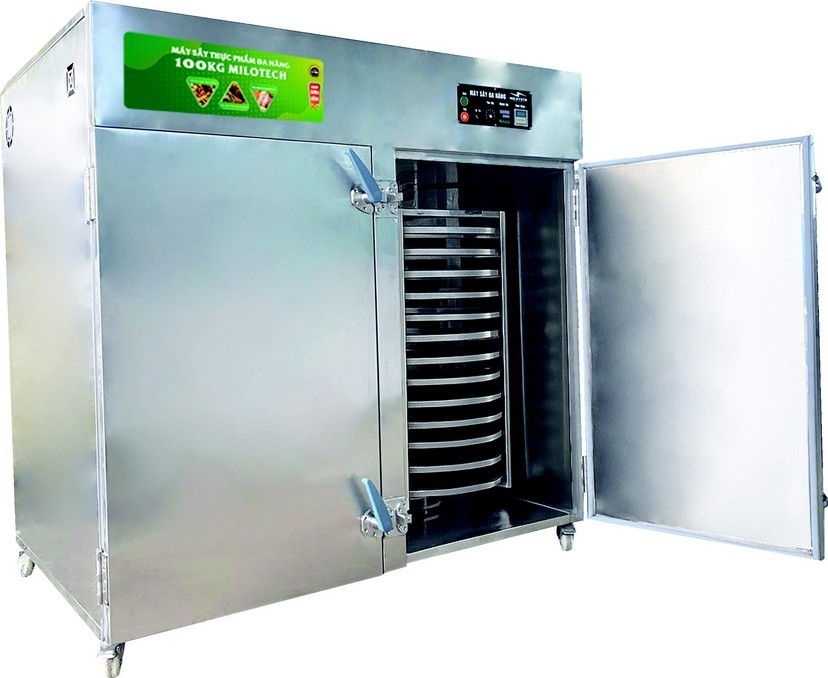
Understand the hot-air drying principle
A hot-air dryer circulates heated air around food placed on trays, racks or another loading arrangement. The air transfers heat to the product and carries moisture away. Drying performance depends on factors such as product thickness, preparation, loading density, airflow distribution and the selected temperature. These variables should be considered together because a setting that suits sliced fruit may not suit leafy herbs or grains. The objective is a repeatable process that matches the product and the factory workflow.
Hot-air, low-temperature air and freeze drying are different
Standard hot-air drying uses warmed circulating air. Low-temperature air drying is also based on air movement, but it is selected when the processor wants a gentler thermal approach; the suitable temperature and process time still depend on the product and equipment configuration. Vacuum freeze drying is a separate process: the product is frozen and moisture is removed under vacuum through sublimation. It should not be treated as simply a colder version of hot-air drying. Milotech lists heat drying, cold drying and freeze drying as separate food drying product lines, so buyers should first define the required process.
Compare model range and temperature requirements
Milotech’s international catalogue lists aluminium-frame hot-air dryer models of 6, 12 and 20 kg, as well as stainless-steel multi-purpose hot-air dryer models of 10, 20, 50, 70, 150 and 200 kg. These model designations give buyers a starting point for discussing batch size and equipment format. Temperature capability must be reviewed for the specific model. For example, Milotech’s 10 kg multipurpose heat dryer page describes a standard 35–95°C version and a higher-temperature 35–150°C version. These ranges are model-specific and should not be applied to every dryer.
Evaluate loading, workflow and product handling
A practical dryer must fit the preparation and post-drying stages as well as the drying chamber. Discuss how operators will load prepared food, distribute it consistently, remove finished product and clean contact areas between batches. Buyers should also consider whether the selected format suits seasonal raw-material volumes or a more regular production schedule. Product thickness, pre-treatment, tray arrangement and batch release criteria should be agreed during process discussions rather than left to assumptions.
Plan technical discussions before ordering
Before requesting a quotation, prepare details about the product forms, expected batch quantity, preferred drying approach, target operating range and site conditions. Milotech welcomes international customers to visit its Vietnam factory to discuss assembly, controls, demonstrations and an agreed factory acceptance test before shipment. This can help both parties review the proposed configuration and clarify what will be checked before delivery.
Contact Milotech to discuss your fruit, vegetable, herb or grain application, product format, batch quantity and preferred drying process. The team can review suitable hot-air dryer options, package the equipment configuration and arrange a technical discussion or factory visit in Vietnam.